
AI Sunday Open Days: What Visitors Told Us About WONDERCUT
What happens when artificial intelligence meets cultural heritage? During four WONDERCUT AI Sunday Open Days across Slovenia, museum and heritage visitors had the opportunity to find out for themselves, stepping into artworks and historical scenes through AI-generated portraits.
As part of the WONDERCUT project’s AI Sunday – Open Days in Museums and Galleries, four public events were organised in Slovenia to invite diverse audiences to experience the WONDERCUT application free of charge in real cultural environments. The events combined visitor engagement, live use of the application, audience feedback and digital promotion, providing practical insights into how AI-supported cultural experiences are received by different age groups and visitor profiles.
Between June and September 2026, the AI Sunday Open Days brought the WONDERCUT experience directly to the public at the National Gallery of Slovenia, City Museum of Ljubljana (MGML), Bled Castle and Pomurski muzej Murska Sobota.
The AI Sunday Open Days were integrated into existing programmes and moments of high attendance at the participating institutions. This included Slovenia’s national Summer Museum Night, regular opening hours at Bled Castle and a free expert-guided museum tour in Murska Sobota. By bringing WONDERCUT into existing cultural programmes, the project was able to reach visitors who might not normally attend an event dedicated specifically to technology or AI.
One QR code, a selfie and a step into history
The idea behind the experience was simple: make AI-supported cultural engagement accessible, playful and easy to try.
At each location, selected artworks or historical scenes were connected to the WONDERCUT web application through QR codes. Visitors could scan the code directly with their smartphone, without downloading an application, give their consent and take a selfie. Within seconds, they received an AI-generated portrait placing their face into the selected artwork or historical scene.
The resulting portrait could then be saved and shared and, at locations where this option was available, printed as a physical souvenir. The SHAPE team was present throughout the AI Sunday Open Days to introduce the experience, guide visitors through the process and collect their feedback.
Four institutions, four different journeys into the past
The first two AI Sunday Open Days took place on 20 June 2026, during the Summer Museum Night in Ljubljana.
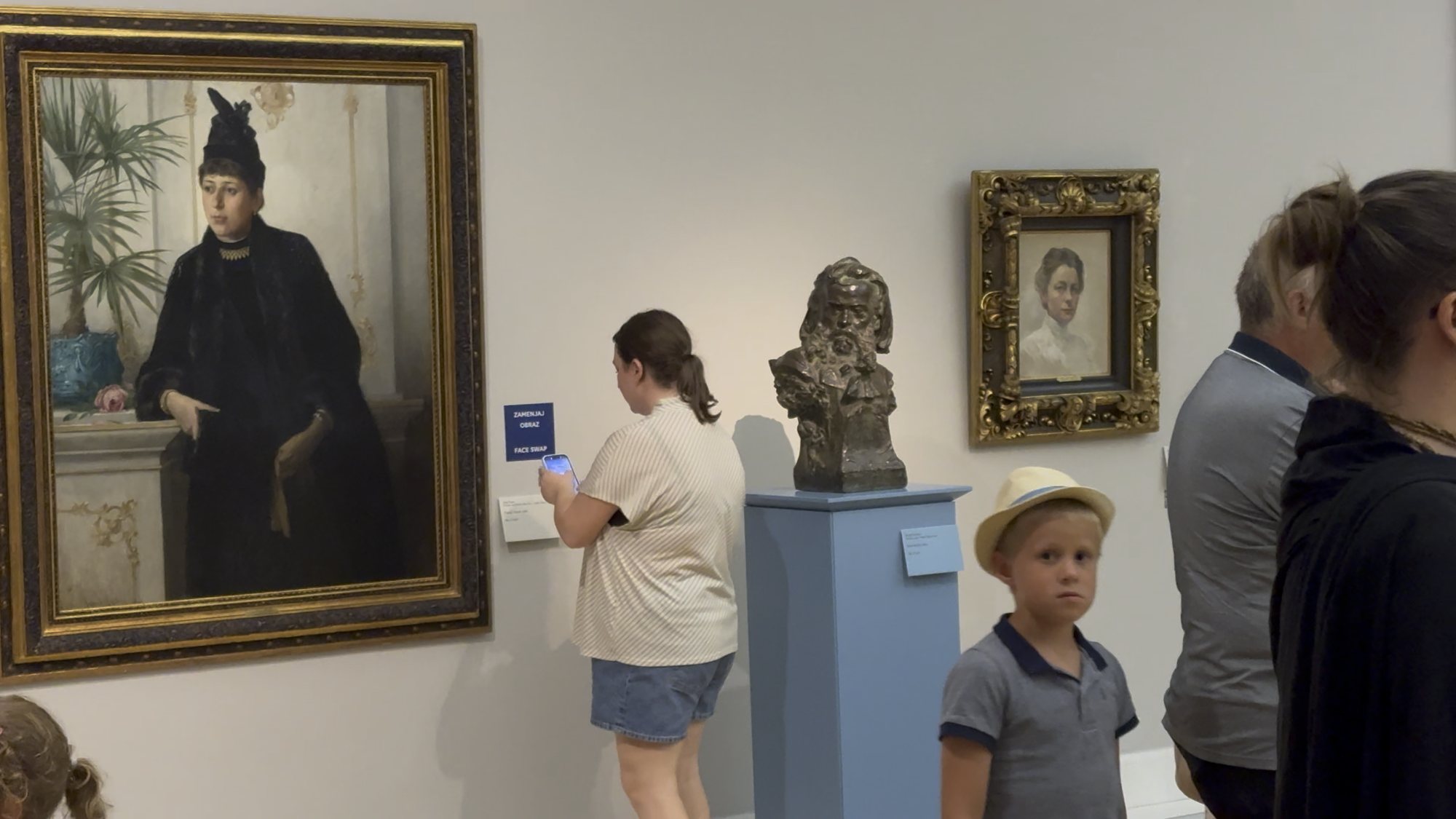
At the National Gallery of Slovenia, visitors were invited to “swap their face” with selected portraits from the Gallery’s collection. Families, children and young adults were among those who experimented with becoming part of a masterpiece. Visitors particularly appreciated the realism, simplicity and playful nature of the experience.
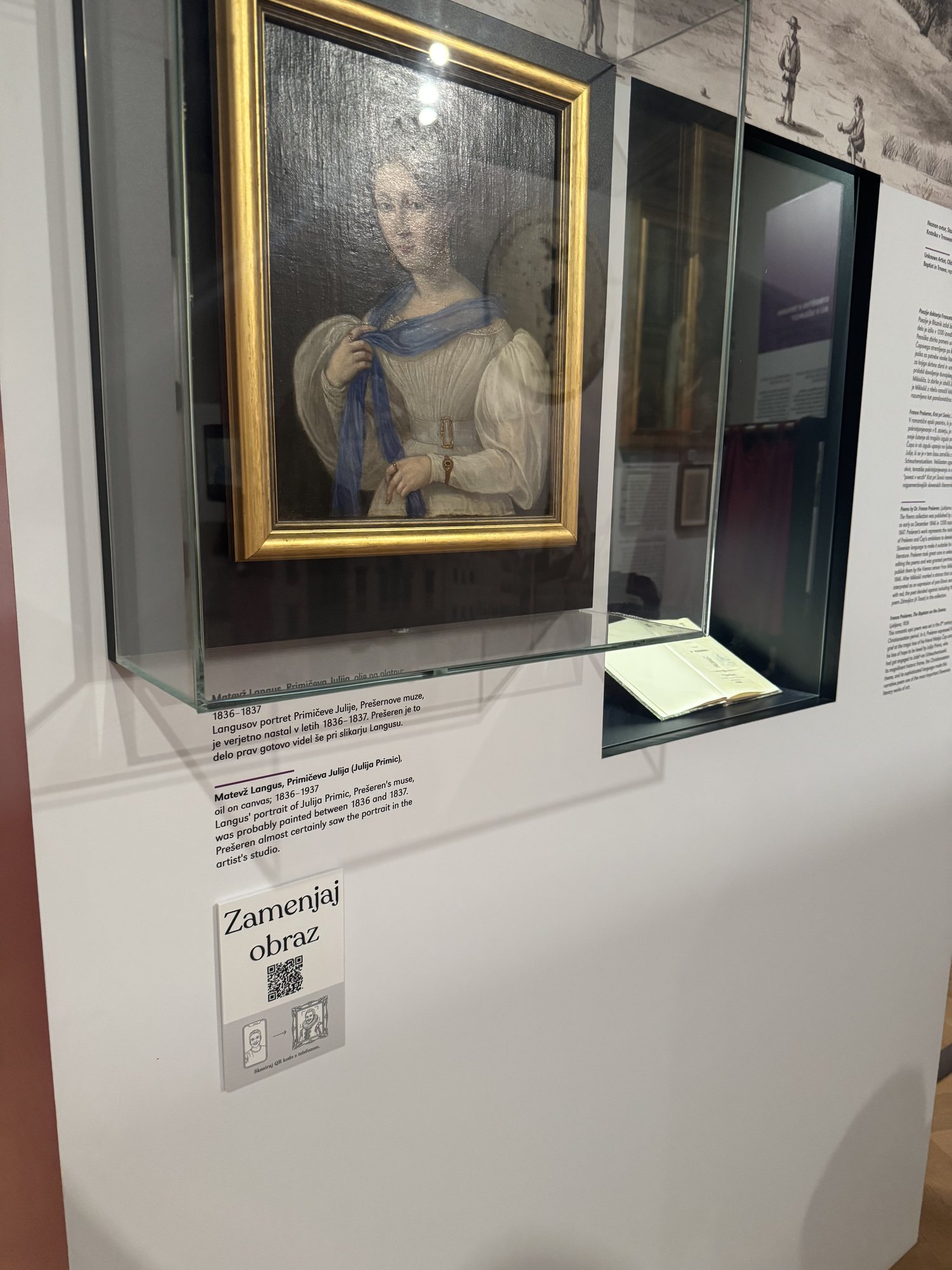
On the same evening, the City Museum of Ljubljana (MGML) offered visitors the opportunity to become Julija Primic, one of the most recognisable figures of Slovenian Romantic history and the muse of poet France Prešeren. Visitors described the experience as new, modern and fun, while their feedback also highlighted the importance of making interactive digital experiences clearly visible within busy museum environments.
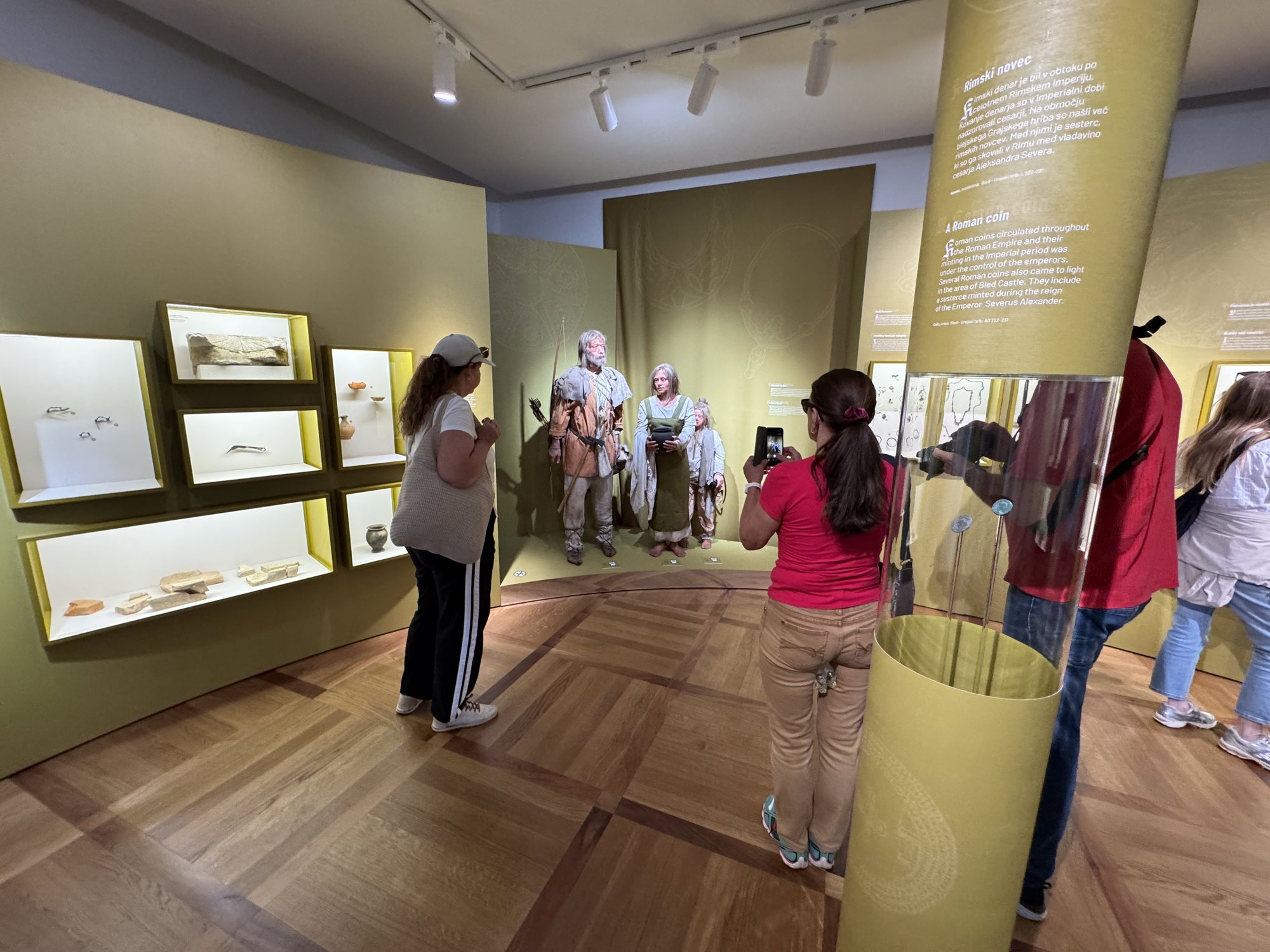
The journey continued on 15 September at Bled Castle, where WONDERCUT took visitors much further back in time. Participants could transform themselves into a member of a 9th-century Slavic family, representing some of the first communities to settle in Bled. The AI Sunday Open Day attracted a particularly international audience, with 12 of the 21 questionnaires completed in English.
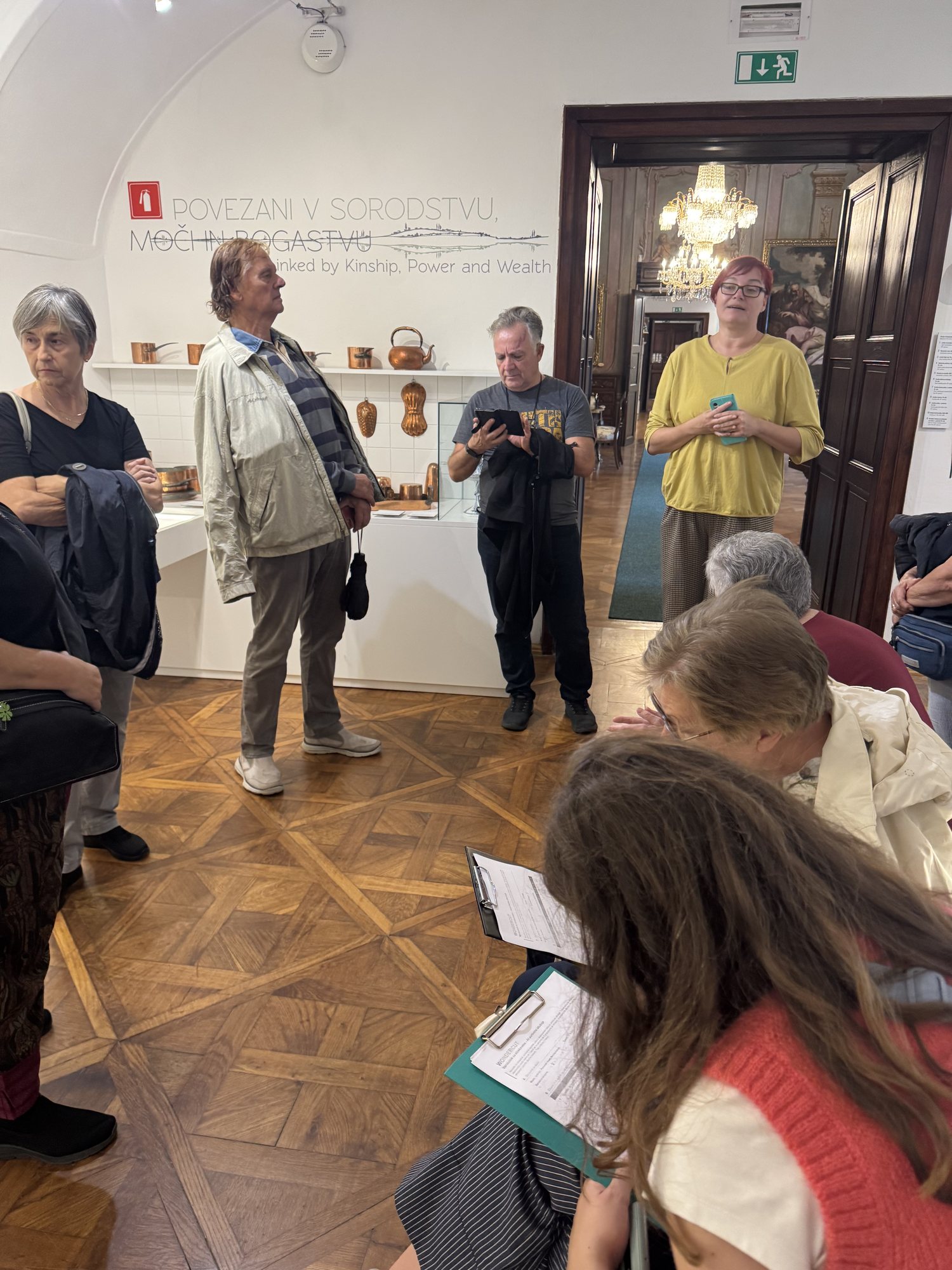
The final AI Sunday Open Day took place at Pomurski muzej Murska Sobota on 17 September. Following a free expert-guided tour of the permanent exhibition, participants could become Count Janez Szapáry (1723–1796), whose family once owned Murska Sobota Castle. The combination of a traditional guided tour with an AI-supported experience created a direct connection between the historical story visitors had just discovered and their own personalised digital portrait.
Visitor Feedback at a Glance
Across the four locations, 54 visitors completed the feedback questionnaire, representing different age groups and backgrounds — from young visitors and families to international tourists and people over 60.
Visitor feedback across the four AI Sunday Open Days was consistently positive:
- 4.34/5 average score across all evaluated aspects
- 87% of respondents were satisfied with the experience
- +57 Net Promoter Score (NPS)
- 4.61/5 for the AI-generated portrait, the highest-rated element
- 4.36/5 for enriching the overall museum visit
- 48 out of 54 respondents said they would recommend the experience to friends or family
The +57 NPS and the 48 out of 54 recommendation result represent two different measures of recommendation: NPS is calculated using the standard promoter, passive and detractor methodology, while the latter reflects respondents’ direct answers about whether they would recommend the experience.
What Visitors Enjoyed
Behind the scores were very personal reactions.
Visitors described WONDERCUT as fun, straightforward and a lively addition to their museum visit. One participant at the National Gallery commented that it was great to see “classic” galleries moving with the times, while another noted that even her five-year-old enjoyed the face-swapping experience.
These reactions reflected one of the strengths of the AI Sunday Open Days: the technology offered an immediate and personal way for visitors to connect with cultural content while keeping the artwork, historical figure or story at the centre of the experience.
Learning from Different Audiences
The AI Sunday Open Days were not only an opportunity to showcase WONDERCUT. They were also an important part of testing how the experience works with different audiences and in different cultural environments.
One of the central aims of the AI Sunday Open Days was to test how WONDERCUT could engage different audience groups, rather than only digitally confident or younger visitors.
The experience at Pomurski muzej was particularly valuable in this respect. Seven of the eleven respondents there were over 60. While these visitors rated the resulting portrait and their overall satisfaction very highly, several found the process more difficult to complete independently.
This provided an encouraging indication that AI-supported cultural experiences can engage older audiences too, particularly when appropriate human assistance is available. It was also a useful reminder that accessibility is not only about what a digital experience offers, but also about how people are supported in using it.
What We Learned for Future Improvements
The visitor feedback revealed several practical lessons for the future development and deployment of WONDERCUT.
While the AI-generated result was consistently the strongest element, the clarity of instructions received the lowest overall score at 3.87/5. Visitors also highlighted the need for better signage at busy venues, more visible save and print options, clearer privacy information, language localisation and assisted use for visitors who are less comfortable with digital technology.
The feedback collected through the visitor questionnaires will directly inform future enhancements of the WONDERCUT application, particularly in onboarding, saving and sharing results, privacy information, language options and assisted use. Lessons concerning signage, accessibility and integration into existing cultural programmes will also inform future deployments and updates to the WONDERCUT Deployment Guide.
Promoting the Experience Beyond the Event
The AI Sunday Open Days were supported by targeted digital communication and promotional activities designed to attract visitors and extend awareness of WONDERCUT beyond those already present in the participating institutions.
The experience also travelled beyond the museum walls. Sponsored campaigns on Meta platforms reached approximately 43,700 accounts and generated 46,826 impressions in the areas surrounding the participating institutions, with the Bled Castle campaign alone reaching more than 18,000 accounts.
Together with communication through the host institutions and WONDERCUT project channels, these activities helped extend the visibility of the project and demonstrate how AI-supported cultural experiences can connect physical heritage spaces with wider digital audiences.
Where culture, technology and people meet
The four AI Sunday Open Days showed how technology can become an additional layer through which visitors interact with collections, stories and historical figures while remaining connected to the physical museum and heritage experience.
By allowing people to see themselves inside an artwork or historical scene, WONDERCUT created a personal and playful entry point into cultural heritage while simultaneously gathering valuable insights about usability, accessibility and responsible implementation.
From a five-year-old swapping faces with a portrait to senior visitors becoming historical figures from Murska Sobota, the AI Sunday Open Days showed how the same digital experience can be encountered by very different generations — and why understanding their different needs matters when designing future cultural technologies.
With the four AI Sunday Open Days completed, the visitors’ feedback now provides a practical basis for improving the WONDERCUT experience and informing future deployments in museums and galleries. What worked, what caused hesitation and what different generations needed from the experience will inform the application’s further development and help make future AI-supported cultural experiences more accessible, engaging and responsible.
Working together with


.png)